~

~

Map of DevonLocation

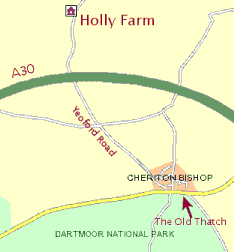
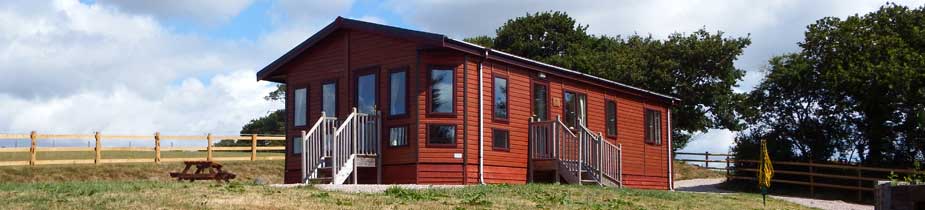
Holly Farm is 10 miles west of Exeter, just minutes of the A30 and on the fringe of Dartmoor National Park.

Click on a link below for more details of the local area:

Map showing Holly Farm and Cheriton BishopDirections

If arriving in the South West via the M5 continue on it to the end (Junction 31) where it divides into the A38 (Plymouth) and the A30 (Bodmin). Take the A30 Bodmin Road and follow for approximately 10 miles and then take the turning to the left marked Cheriton Bishop. Drive into the village past the “Old Thatch” on the left and take the second turning to the right (signed to Yeoford and also marked “Holly Farm”) immediately before the Village Store / Post Office. Holly farm is on the left of this road after one mile. Please ring the bell on the gate - you will almost certainly receive a noisy but friendly welcome from our dogs - Holly, Zac and Teddy!

If arriving on the A303/A30 join the M5 either at Taunton (A358 from the A303) or at Junction 29 from the A30 and continue as indicated above for the M5.

If arriving from Cornwall take the A30 and continue past Okehampton until reaching the roundabout at Whiddon Down. Turn left signed Cheriton Bishop and continue through Crockernwell reaching Cheriton Bishop after approximately 4 miles. Drive into the village taking the second turning on the left (signed to Yeoford and also marked “Holly Farm”) immediately after the Village Store and Post / Office and continue to Holly Farm as directed above.

Public Transport: The nearest mainline rail connection is Exeter St Davids; there is an infrequent bus service to Cheriton Bishop or a taxi will cost around £20. The nearest air link is Exeter International Airport which is close to the M5/A30 at a distance of about 20 miles from Cheriton Bishop.

Cheriton Bishop

The Church

Originally Norman - the old font (Circa 1075) - a simple building of sandstone. In the 13 th Century a chancel was added; then in 1450 the west wall disappeared and the tower was begun which is said to be one of the finest in any country parish, except for a few in North Devon. There are remnants of an ancient pre-Reformation screen, with painted panels depicting some of the saints. One of particular interest is that of St. Dennis carrying his head. There is said to be only one other picture depicting this. On the walls of the north aisle hangs a lozenge shaped painting of the Royal Arms of Queen Elizabeth 1. In the roof of the aisle is a boss of particular interest, a carving of three rabbits with ears conjoined, a symbol of the Blessed Trinity.

Outside the Church is what appears to be a large stone table. Years ago farmers would pay out the weekly wages to their workers after the Service, thus making sure they would attend church on Sundays.

Old Farms

A large number of farms in the district date back to the Domesday Book period and before, but the two very earliest mentioned in records are Grendon, known as Grenandune in 739 and Treable, originally in the possession of a Britan named Ebell, but in 976 was given by King Edward the Martyr to one Aelfsige. Unfortunately the present farm house is very modern.

Old Buildings

The former Royal Hotel at Crockernwell, part of Cheriton Bishop, is an old coaching house and the half stage between Exeter and Okehanpton. The stables are now the wheelwrights shop. The Hotel was also used as a Court House, where the Crockernwell Sessions were held. It is said Judge Jefferies held some of his West Country Assizes there. The Crockernwell Sessions are now held at Moretonhampstead.

SignpostThere is still the old Toll House or Round House on the main road at Cheriton Cross. There was also a toll gate near Hooperton cross on the Okehampton side of Crockernwell, no trace of this remains now.

Another point of interest is the Dancing Tree or Twisted Oak on the corner of Combe Lane, about a mile along the main road towards Exeter. Boards used to be laid on the twisted top and about 30 people used to be able to dance there, complete with three fiddlers. This was done when the people paid their tolls, or rents to Fulford. There is an old wayside cross at Cheriton said to mark the Pilgrims way to Exeter.

Old Manors

The old Manor of Eggbeare now Lower Eggbeare Farm goes back to about 976, when it was held by Leofgar. When mentioned in Domesday Book it was held by Molbert, son of Lambert, who also held Fulford. Later on it is known to have belonged to John de Kelly in Edward 1 st reign. There used to be an old chapel attached to the Manor, traces of which still remain in the farm buildings.

Lambert used to be known as Little Lampford and stands on the site of a homestead farmed before William the Conqueror's time. Leofgar owned this manor until the Danes invaded England in 1016 and Canute was crowned King. Under him the country was divided into four Earldoms, one of which the Earldom of Wessex was given to Godwin and Leofgar was dispossessed. By 1086 Lambert or Little Lampford changed hands again. In 1241 Little Lampford was held by the Prior of Plympton and belonged to the Honour (?) of Plymouth. The house as it stands now is of cob and marl. There is still a good deal of old oak carved doorways and paneling left.

In the lane which leads from the house to the main road at Crockernwell there is a most curious culvert. It is fully fifty feet long and big enough to allow a man to walk through. Its walls, floor and arched roof are constructed of stone, mostly solid lumps of granite. There are numerous out-buildings and it is said that teams of coach horses were kept down the lane to the coaching Inn when and as required.

Medland manor is the third old manor in the Parish. In 1274 it belonged to Henry de Stanewe, under the Abbey of Tewkesbury. After the Reformation it belonged to the Davys for several generations, finally coming in to the hands of the second son of Doctor Foulkes. Unfortunately the old house was burnt down in 1773. The present building is very picturesque.

Ghosts seem to be popular but as yet little real information has been collected about them or a white witch who lived down an old lane at the bottom of Cheriton Hill.

Cheriton Bishop oakInformation has been collected from Domesday Book, Polwele's Devon 1793 - 1806, Kelly's Directory, old records at Lambert and from notes on the Church written by a previous Rector, the late Reverend Darrol Smith.

Add to favouritesAdd page to Favourites
© Holly Farm 2004 www.hollyfarmstables.co.uk

Web design by
Plexis Design